Interview
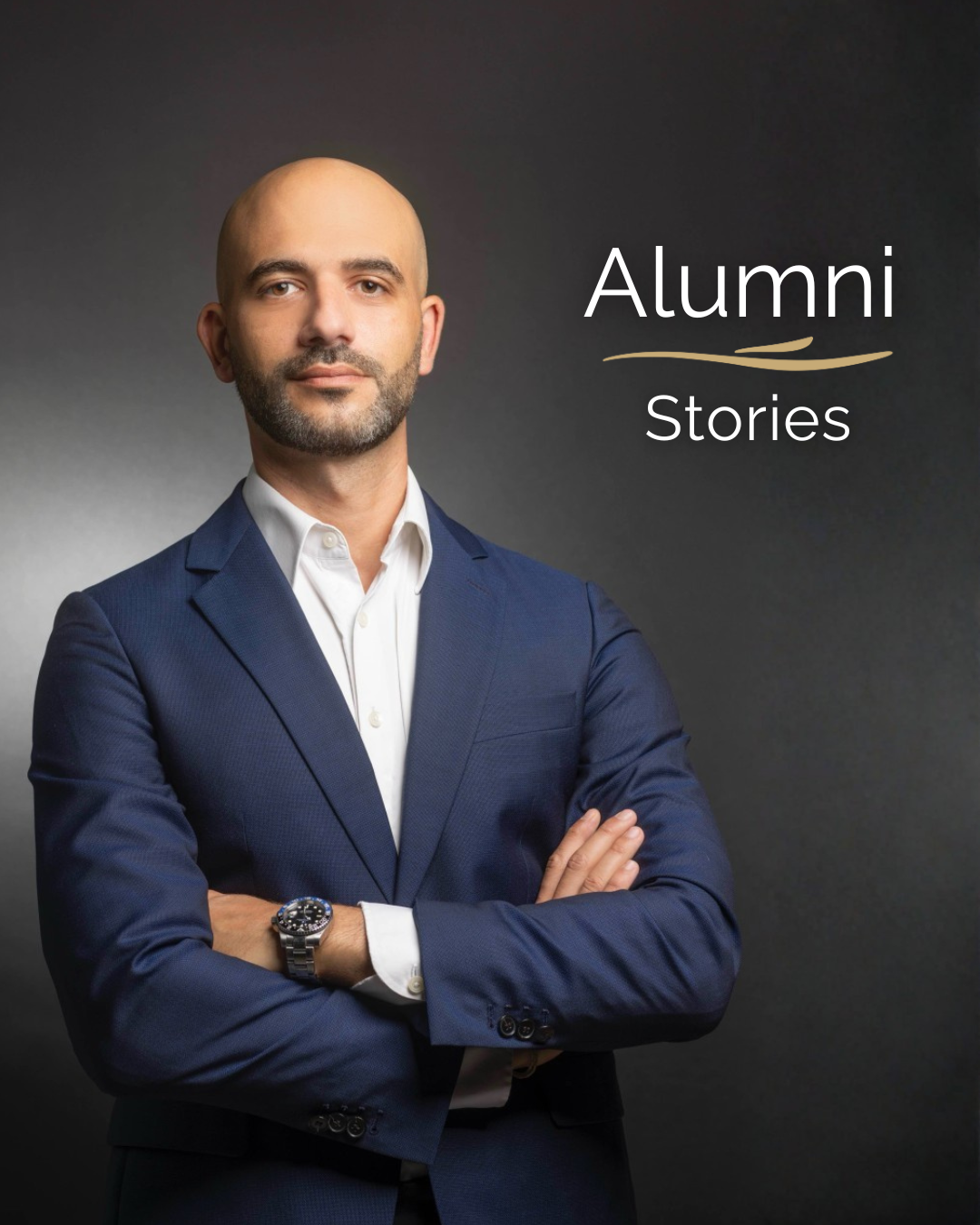
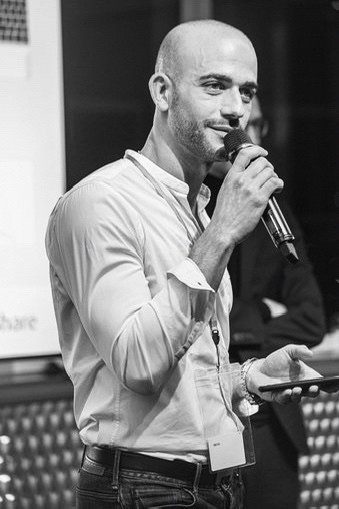
Frédéric Lazzara
In this interview, Frédéric Lazzara shares his vision of leadership, his relationship with the field and the way in which he conceives sincere, lasting and embodied experiences.
In hospitality, the strongest career paths are never linear. They are built in motion, at the crossroads of the demands of the field, vision and humanity. Frédéric Lazzara, an alumnus of the École Hôtelière de Genève, embodies this living trajectory.
From his early experience in the hotel business to the most daring environments in the restaurant and venue design sectors, his career has been shaped by a strong conviction: operational excellence is only worthwhile if it is accompanied by meaning, identity and a collective spirit. Trained at the EHG, he has developed a global vision of the business, in which management, customer experience, corporate culture and creativity interact without compromise.
Can you tell us about your career path from graduating from the École Hôtelière de Genève to your current position at Big Mamma?
“I’ve built my career as a movement, never as a fixed trajectory. The École Hôtelière de Genève taught me solid fundamentals, high standards, an eye for detail and a global vision of management, while putting people at the heart of the business.
When I left school, I joined MAMA SHELTER when it opened its second establishment. At the time, the group was perceived as a UFO: a hotel startup that broke traditional codes by blending design, culture and hospitality. Participating in its beginnings and scaling phase was a seminal experience. I learned what it means to build a living brand, in direct contact with its founders.
Seeing this vision become a benchmark and then become part of the Accor Group’s ecosystem has reinforced my conviction that the companies we choose are also true places of professional and personal development.
Later, via SSP and Areas, I worked with brands such as EXKi, Pret A Manger, Caviar House, Starbucks and Monoprix. All shared a common denominator: strong identities capable of combining artistic direction, operational efficiency and marketing excellence.
Until Big Mamma Group, where I found a model that fully corresponds to me: a business based on excellence, a customer experience driven by a sincere and identifiable product, and a culture where the intensity of the field, the artistic universe and the human coexist without compromise.”
Your first steps at the Hôtel Villa M Marseille and the Swissôtel in Geneva marked your debut in the hotel business. What memories do you have of these early experiences?
“These early experiences were deeply structuring. Very early on, I discovered the power of teamwork and the importance of being a player in one’s own career. Being recognized as the best employee from my first internship was above all the recognition of teamwork. It shaped my vision of management: valuing commitment and establishing a climate of trust are lasting levers of performance.
During my second internship at Swissôtel Métropole Genève, I had the opportunity to manage a team, well beyond the expected scope. I also led a space reorganization project to create a new service, which was then rolled out by the establishment. That’s when I realized that hospitality also relies on the ability to renew oneself.”
At what point did you feel that your vocation went beyond service to leadership and team management?
“The transition came naturally. Very early on, I felt the need to understand the whole system: to organize, structure and give clear direction, particularly with regard to the product vision. I understood that leading is not about imposing, but about guiding and developing resources. Good leadership isn’t about impressing, it’s about making the path clear.”
You experienced the daring world of Mama Shelter before plunging into the highly structured world of Areas and API Restauration. Two very different environments. What challenged you most?
“Contrast. Moving from a highly creative world to highly structured organizations taught me to strike a subtle balance: preserving audacity without losing control, structuring without diluting the soul. The companies I worked with shared one constant: a strong cultural identity, underpinned by operational excellence. This consistency has always been a driving force in my career.”
At Mama Shelter, you progressed from management control to administrative and financial management. What were the greatest lessons learned during this period?
“This period gave me a complete picture of a group’s development. It taught me how to turn figures into decisions, and how to link economic performance with human reality. I also integrated an essential idea: accuracy is often born of simplification. Removing the unnecessary to reinforce the essential has become a structuring principle in my approach to managing organizations.”
Managing dozens of teams in so many different contexts – design hotels, airports, catering – how have you learned to adapt to each corporate culture?
“It all starts with analysis, then implementation, without wasting too much time. Each environment has its own codes and constraints. Before providing a method, we need to understand what holds both the business and the team together. I then rely on a few constants: clarity, exemplarity, recognition and a reassuring framework. Experience has taught me that you don’t reach a target through obsession, but through accuracy and consistency.”
How would you describe the Big Mamma culture and what sets it apart from other restaurant groups?
“Big Mamma embodies a culture of excellence, meritocracy, authenticity and entrepreneurship. The intensity of the group’s development, combined with a strong artistic universe specific to each establishment, generates a rare sincerity in the customer experience. Managing this group’s establishments was a particularly revealing step in my career: a rich, demanding and deeply formative experience, both on a human and a business level.”
You've managed teams of up to 100 people. What is your management philosophy?
“I believe in managers who build pride. My role is to create a clear framework, a legible vision and collective energy. Shared responsibility is at the heart of this approach.”
If you had to define your management style in three words, what would they be?
“Human.
Demanding.
Stimulating.”
How does your professional approach translate into practice today, and what kinds of collaborations fuel your thinking and your projects?
“Human connections have always guided my career. Today, through my collaboration with Preston Web Agency, I’m involved in projects that place identity, creation and experience at the heart of places.
Preston supports brands in building coherent universes, where strategy, digital, art, design and furniture become structuring levers for the identity of establishments.
Together, we bring together artists, craftsmen and designers with entrepreneurs, hoteliers and restaurateurs, to transform an intention into a concrete experience. My role is to bridge the gap between the creative vision and its operational and visual translation, designing solutions that are legible, functional and scalable, and capable of standing the test of time.
The aim is to create embodied places with a strong identity, where aesthetics, ergonomics and usage interact naturally with the establishment’s activity, to offer a coherent, fluid and memorable experience.”
–
We would like to extend our warmest thanks to Frédéric LAZZARA for the wealth of information he shared and the time he devoted to this interview. His background and vision are a source of inspiration for our students, alumni and hospitality professionals alike.