

Why Hospitality Careers Are Attracting a New Generation Seeking Meaning
Hospitality: a heartfelt profession for a committed generation
Why Hospitality Careers Are Attracting a New Generation Seeking Meaning
Young people’s expectations of work have changed significantly in recent years. Salary remains important, of course, but meaning, human interaction, work-life balance and international opportunities now play an increasingly central role in career choices.
In this context, careers in hospitality and the education offered by Swiss hospitality schools are attracting growing interest from young people looking for dynamic, people-oriented and internationally open professions.
According to the latest Gen Z and Millennial Survey published by Deloitte (2024), based on nearly 23,000 respondents across 44 countries, almost half of young people consider purpose and well-being at work to be among their top professional priorities, alongside salary and career advancement. The study also highlights that many expect artificial intelligence to significantly transform the workplace and believe developing new skills will be essential for their future careers.
Many young people are seeking careers that allow them to develop practical skills, work closely with others and maintain a certain level of mobility throughout their professional lives. This shift is contributing to renewed interest in sectors such as hospitality.
Hospitality: Much More Than Hotels and Restaurants
Hospitality has long been associated mainly with hotels and restaurants. Today, however, it encompasses a much broader range of professions centered on welcoming people, delivering outstanding experiences and managing human interactions. The skills developed in a hospitality management school are now valued across many industries, including:
- hospitality and tourism
- luxury and retail
- aviation and transportation
- events and entertainment
- sports organizations
- international institutions
- service-oriented businesses
This evolution reflects a wider transformation in the global economy, where the experience delivered to customers, visitors or users has become a key element of value creation.
The Experience Economy
Across many sectors, a product or service alone is no longer enough. Organizations now aim to create memorable experiences for their clients and guests.
This shift can be seen in hotels, airlines, luxury brands, major events and service companies around the world. Digital technologies have accelerated many interactions but have also made some relationships more impersonal.
As a result, attention to service, listening, empathy and the quality of human interaction has become increasingly important. The ability to create a genuine relationship with a guest or client remains at the heart of hospitality.

Artificial Intelligence Changes the Tools, Not the Essence
Like many industries, hospitality is integrating digital technologies and artificial intelligence into its operations. These tools can improve organization, data analysis and operational efficiency.
At the same time, the rapid development of artificial intelligence is prompting many young people to think carefully about the type of professions they want to pursue. Many are drawn to careers where human skills communication, empathy and adaptability remain essential and difficult to automate.
As Duncan Robertson, Deputy Director of École Hôtelière de Genève, explains:
“Artificial intelligence is transforming our tools, but it will never replace the quality of genuine human interaction. As more services become automated, being welcomed by someone who listens, understands and anticipates your needs becomes an even more valuable experience.”
Hospitality professions are built precisely on these human capabilities: understanding expectations, managing unexpected situations and creating authentic experiences.
Studying at a Swiss Hospitality School
Switzerland holds a unique position in hospitality education. Studying at a hospitality school in Switzerland offers access to a long-standing tradition of excellence recognized around the world.
These programs develop skills that are highly valued across many industries, including leadership, team management, customer experience and operational excellence.
In Geneva, École Hôtelière de Genève has been educating hospitality professionals for more than a century in an international environment at the heart of Europe.
The school offers a Swiss ES Diploma in Hospitality Management that combines academic education with extensive professional experience through internships.
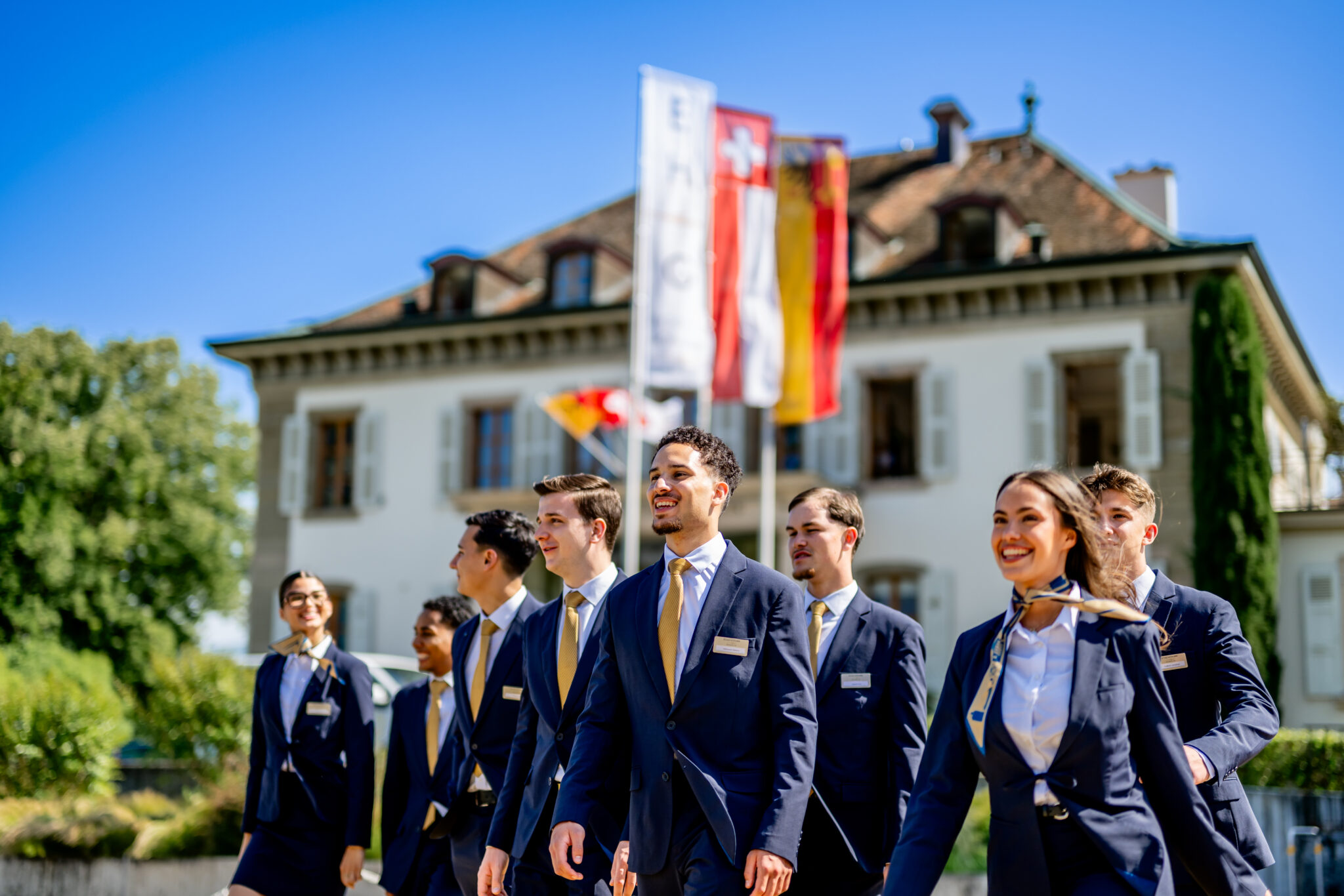
École Hôtelière de Genève: More Than a Century of History
Founded in 1914, École Hôtelière de Genève is one of the historic institutions in hospitality education. Located in the international city of Geneva, the school welcomes Swiss and international students in a deliberately human-sized academic environment.
The institution is regularly ranked among the top hospitality schools worldwide in several international rankings.
Operating as a non-profit organization and owned by GastroSuisse, Switzerland’s largest industry association for hospitality and gastronomy, the school has a clear mission: to educate professionals who combine technical expertise, leadership skills and a strong sense of responsibility.
Educating Responsible Professionals
Today’s younger generations place strong importance on environmental and social issues. Businesses also increasingly expect future professionals to understand these challenges.
École Hôtelière de Genève has strengthened its commitment to sustainability and corporate responsibility. The school participates in initiatives such as the Convention des Entreprises pour le Climat (CEC) and has developed several projects involving students directly.
These include the Planet Champions program and a student-led sustainability club that encourages reflection and action on responsible practices within the hospitality industry.
Skills That Open Many Career Paths
While some graduates naturally pursue careers in hotels or restaurants, many move into other sectors.
The competencies developed through hospitality studies leadership, attention to detail, service excellence, communication and problem-solving are highly valued in industries such as luxury, events, transportation, consulting and services. Hospitality therefore represents a true school of leadership. Learning how to manage teams, anticipate expectations and coordinate complex operations provides a solid foundation for diverse career paths.
From Geneva, École Hôtelière de Genève continues its mission of educating a new generation of professionals capable of combining service excellence, innovation and responsibility.


