

Eighteen months of classes, eighteen months of work experience: how hospitality managers are trained in Geneva
Eighteen months of coursework, eighteen months of work experience:
How to Become a Hospitality Manager in Geneva
At eighteen, at the end of high school, the question is no longer just about choosing a field of study. It’s about figuring out what comes next. Employers expect recent graduates to be up to speed quickly, and these expectations are becoming more demanding.
A degree alone is no longer enough
The figures published in late August 2026 by the Federal Statistical Office are clear. Between 2023 and 2025, the ILO-defined unemployment rate among holders of a Swiss master’s degree rose from 3.9% to 6.4% one year after graduation. Among holders of a bachelor’s degree from a university of applied sciences, it rose from 3.4% to 4.9%. When the survey asks graduates what made their job search difficult, the most common response remains the same year after year: a lack of professional experience.
These data pertain to universities and universities of applied sciences, not colleges, which follow a different educational model. Nevertheless, they offer useful insights for any family considering educational options. A degree opens a door. Experience lets you step inside.
Eighteen months of classes, eighteen months in the field
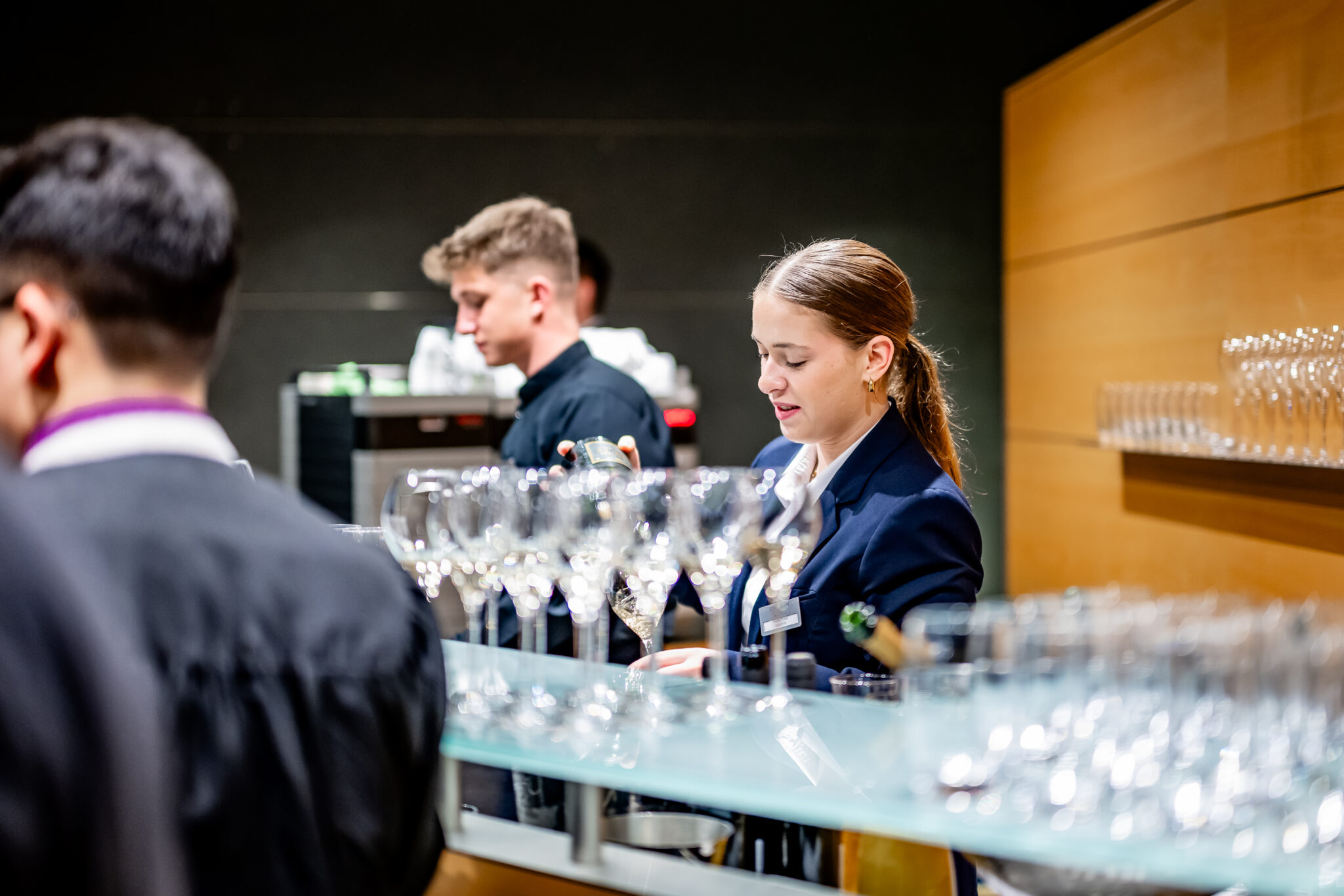
The Geneva Hotel School, founded in 1914, has structured its hotel management program around this balance. The ES program follows a work-study model. One semester of classes on campus, followed by one semester of an internship at a company, and so on for three years. In total, eighteen months of coursework and eighteen months of paid professional experience, both in Switzerland and abroad.
Starting in the first year, the practical training takes place at the Geneva Marriott Hotel and the Crowne Plaza Geneva. By the time they graduate, students have already completed three internships. They enter the job market with a background that few recent graduates can match.
Knowledge, Skills, Interpersonal Skills
The curriculum is based on three pillars: academic knowledge, operational expertise, and interpersonal skills. Management, finance, marketing, human resources, and law play a central role, because running a hotel or restaurant is like running a business. The high standards—a hallmark of the school since 1914—are then put to the test in real-world situations, in front of customers who aren’t just playing along.
Added to that are the skills you can’t learn from a screen: reading a situation, defusing discontent, and making decisions with incomplete information. Managing a team on a busy day. These skills are becoming rare as everything else becomes more standardized, and employers are seeking them far beyond the hospitality industry.
Artificial Intelligence, Without Sacrificing Judgment
EHG has chosen to integrate artificial intelligence into its curriculum rather than keep it at arm’s length. Its students learn how to use it, understand its limitations, and maintain control over decision-making. The school has developed its “digital butlers”—assistants that personalize the support provided to each student.
This year, the coursework for the post-diploma certificate in corporate social responsibility has been integrated into the ES curriculum. Sustainability, resource management, responsible procurement, and employee expectations: these topics are becoming core competencies for future managers, rather than peripheral specializations.
A house, a park, small class sizes
A Swiss nonprofit institution, the EHG is housed in a historic mansion and its grounds, across from the Palais des Nations. It enrolls between 250 and 300 students and holds two intakes per year. Instruction is conducted in French. Admission is open to applicants who have earned a high school diploma, a “maturité,” or an equivalent professional qualification, along with a B2 language proficiency level.
Class sizes are intentionally kept small. Each student is known to their instructors, receives individualized support, and is guided when they face challenges. This is a deliberate choice, not an imposed constraint.
A degree that is now recognized abroad
In 2026, EHG celebrated its 30th anniversary as a higher education institution and, that same year, ranked fifth in the world in the CEOWORLD ranking of hospitality schools.
Effective October 1, 2026, the amendment to the Federal Vocational Training Act authorizes higher education institutions to include the designation “Professional Bachelor” on their diplomas, alongside the protected title. EHG graduates will thus receive the title “Certified Hotel and Restaurant Manager (ES), Professional Bachelor” or “Certified Hotel and Restaurant Manager (ES), Professional Bachelor.” This measure applies to all ES diplomas recognized by the Confederation, regardless of the year they were awarded.
The change may seem administrative, but it isn’t. Swiss higher vocational education credentials were poorly understood abroad, where recruiters think in terms of bachelor’s and master’s degrees. For a recent graduate applying for a job in Paris, London, or Dubai, the difference is very real.
For Professionals and Businesses
This approach—learning first, then applying—applies not only to initial training but also shapes the school’s continuing education offerings. The certificates in hotel management and post-diploma programs are designed for professionals who want to enhance their skills without leaving their jobs, as well as for those seeking a career change. The formats are designed to be compatible with a full-time job.
Companies are looking for something else: customized training for their teams on service excellence, customer service, operational management, or leadership. The hospitality industry has expanded far beyond its original sector. Private banks, international organizations, luxury retailers, and healthcare facilities now turn to it with the same expectations as a hotel.
Come see
A website is no substitute for a visit, and a brochure doesn’t convey the atmosphere of a classroom. Young people ages 15 to 19 can spend a week getting a behind-the-scenes look at the profession during Discovery Week in July 2027. There are twenty spots available, half of which are already reserved.
Families are invited to the open house on Wednesday, November 4, 2026, or to schedule an individual tour by appointment. Spots are limited, and the last intake was filled via a waiting list. It’s best to apply early.

