Interview
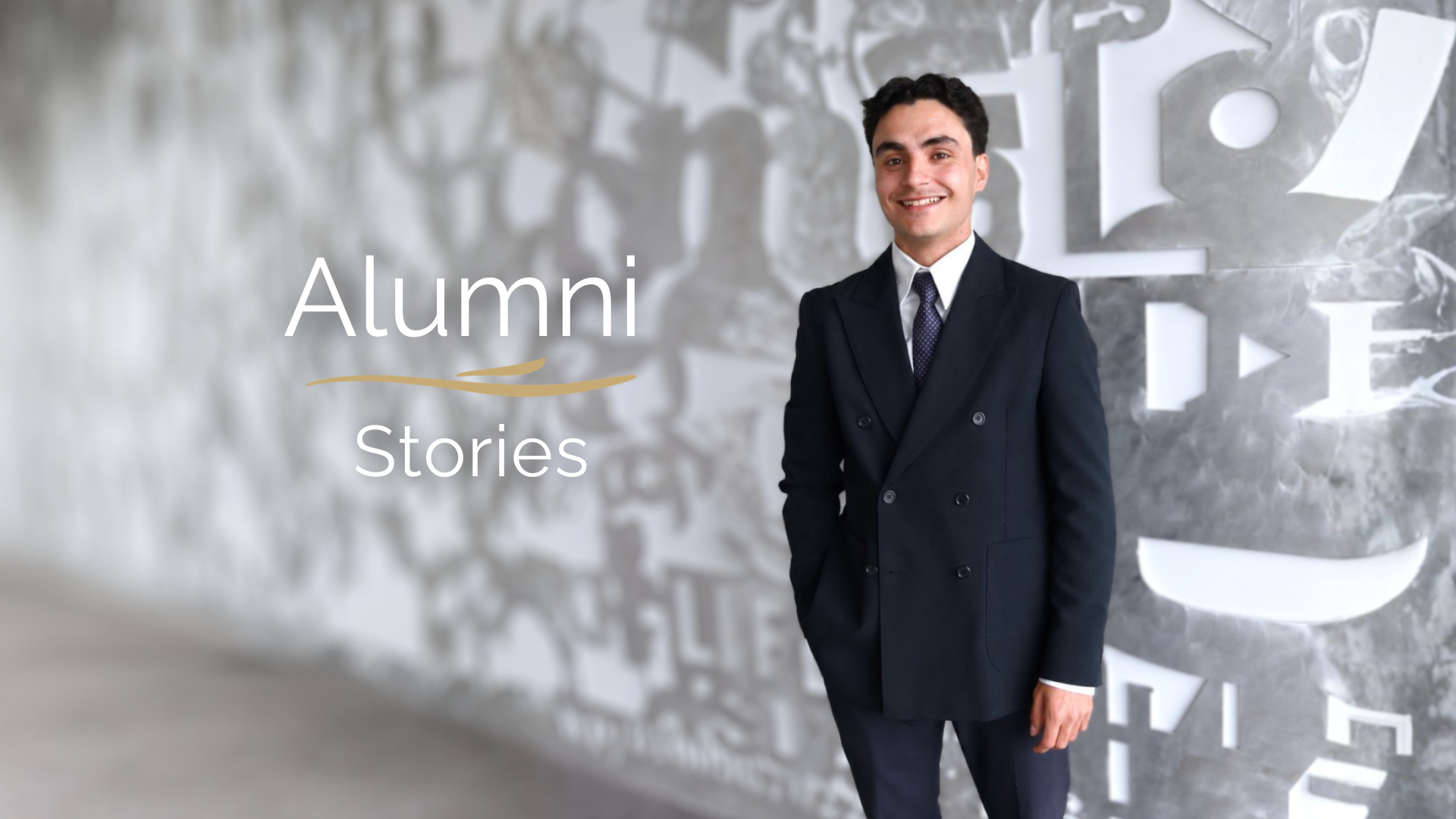
Mateo Escriva
In this interview, he looks back at the experiences that have shaped his career, the challenges of an unconventional reconversion and how the hotel business continues to influence his vision of wealth management consulting.
From pastry-making to wealth management, from luxury hotels to the financial markets: Mateo Escrivaill’s career path showsjust how unexpected career paths can be when curiosity, determination and the desire to learn come together.
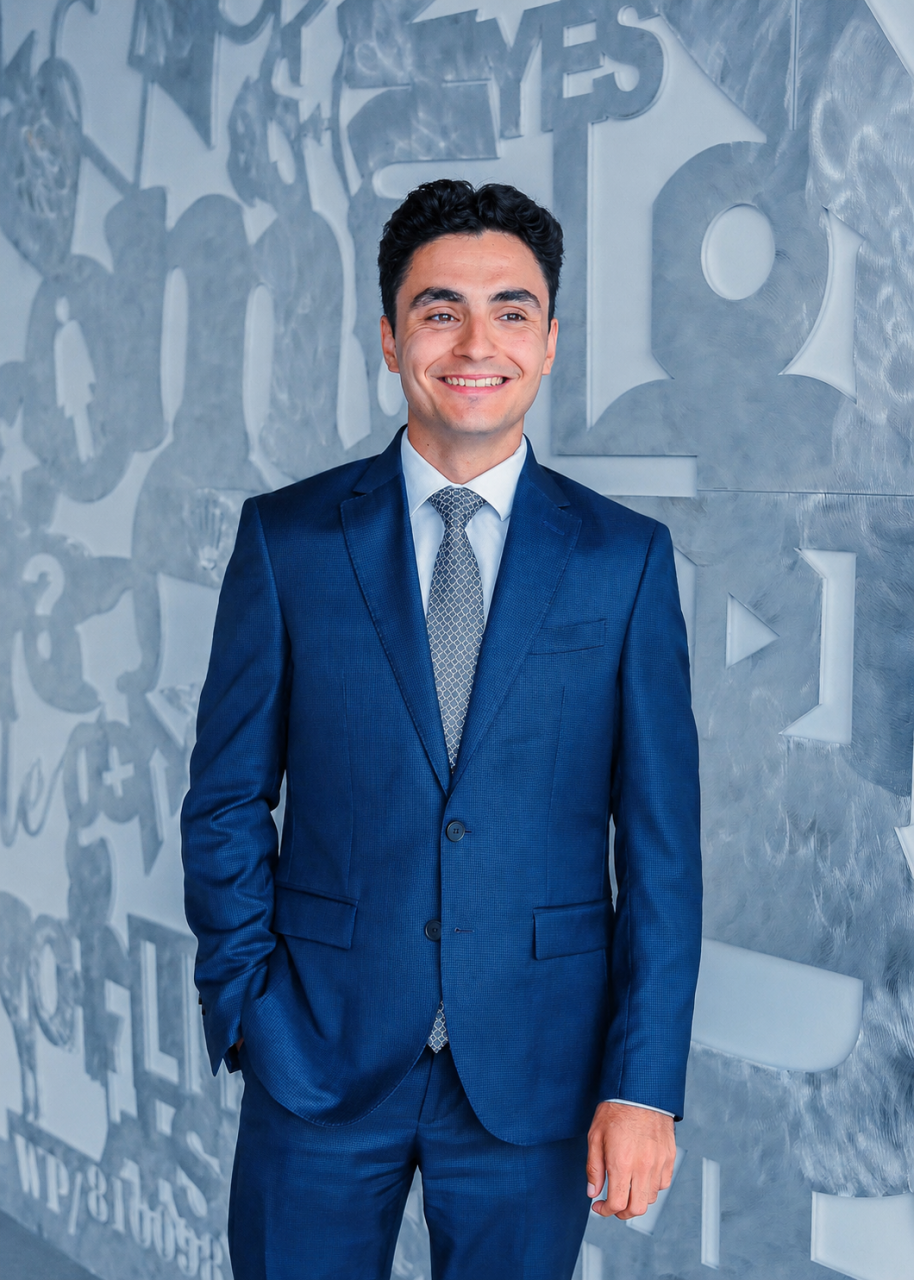
A graduate of the École Hôtelière de Genève, Mateo has transformed the customer relations expertise he acquired in the demanding world of hospitality into a real asset in the financial sector. Now a Wealth Management Analyst at SERENIS – Family Capital, he works in an environment where financial technicality and service excellence go hand in hand.
When you think back to your time at the École Hôtelière de Genève, did you ever imagine yourself working in wealth management?
“Honestly, I never imagined I’d one day be working in wealth management when I arrived at the École Hôtelière de Genève. At that time, my world was above all that of pastry-making and the traditional hotel business. I came from a very operational, hands-on environment, where you work with your hands, precision and creativity.
Looking back, I realize that the EHG was above all a formidable gas pedal of openness. Over the course of my courses, internships and encounters, I realized that the skills acquired in hospitality were much more cross-disciplinary than I had imagined. The school doesn’t just train hoteliers: it trains them in management, human relations, service, adaptability and leadership.
The gateway to the Geneva School of Management also played a key role. It enabled me to discover another world, much more oriented towards finance and analysis, while remaining connected to that relational dimension I already loved so much. It was at this point that I began to see possibilities emerging that I’d never thought of before.”
Was there a particular moment or experience at EHG that influenced the direction you took afterwards?
“Yes, several experiences have marked my career path, but some have truly changed the way I see my professional future. My third internship at theHotel du Cap-Eden-Roc is probably the most decisive.
I worked as a concierge in an extremely demanding and exclusive environment. I discovered an international clientele accustomed to an exceptional level of service, where every detail counts and where anticipating needs becomes almost an art.
This experience left a deep impression on me, because it helped me understand that customer relations go far beyond mere service. There’s a real psychological dimension: understanding implicit expectations, analyzing behavior, knowing when to be present or discreet, creating a relationship of instant trust. I observed professionals capable of handling complex situations with impressive elegance and mastery.
Before that, my internship at La Cave de Genève had already awakened my interest in customer contact. It was a totally different environment, more oriented towards sales and events, but it enabled me to develop my autonomy and gain confidence in direct exchanges with customers.
These experiences completely changed my vision. I thought I’d stay in the kitchen, but I discovered a passion for human relations and personalized support.”
When did you feel the urge to branch out into finance?
“The idea of going into finance was built up gradually. After graduating from EHG and during my military service, I was still thinking about moving into the operational hotel business. I had even started looking at different positions in this sector, with the long-term aim of moving into management positions.
But at the same time, several things began to resonate differently. Firstly, I’d always had a natural affinity with numbers, mathematics and financial management. At school, I was particularly at ease in these subjects and often helped some of my classmates with them.
Then, several friends who had followed the “passerelle” encouraged me to explore this path. They saw in my profile an interesting complementarity between the interpersonal skills acquired in the hotel business and the analytical skills associated with finance.
From then on, I began to take a greater interest in the sector. Above all, I saw this transition as an opportunity that could open new doors for me without closing any others. I figured it wouldn’t cost me anything to try.
I was also fascinated by the world of finance. Like many people, I had this somewhat idealized image of the world of finance that you see in films or in the major international financial centers. But beyond this image, I was above all intrigued by what this sector actually did on a daily basis.”
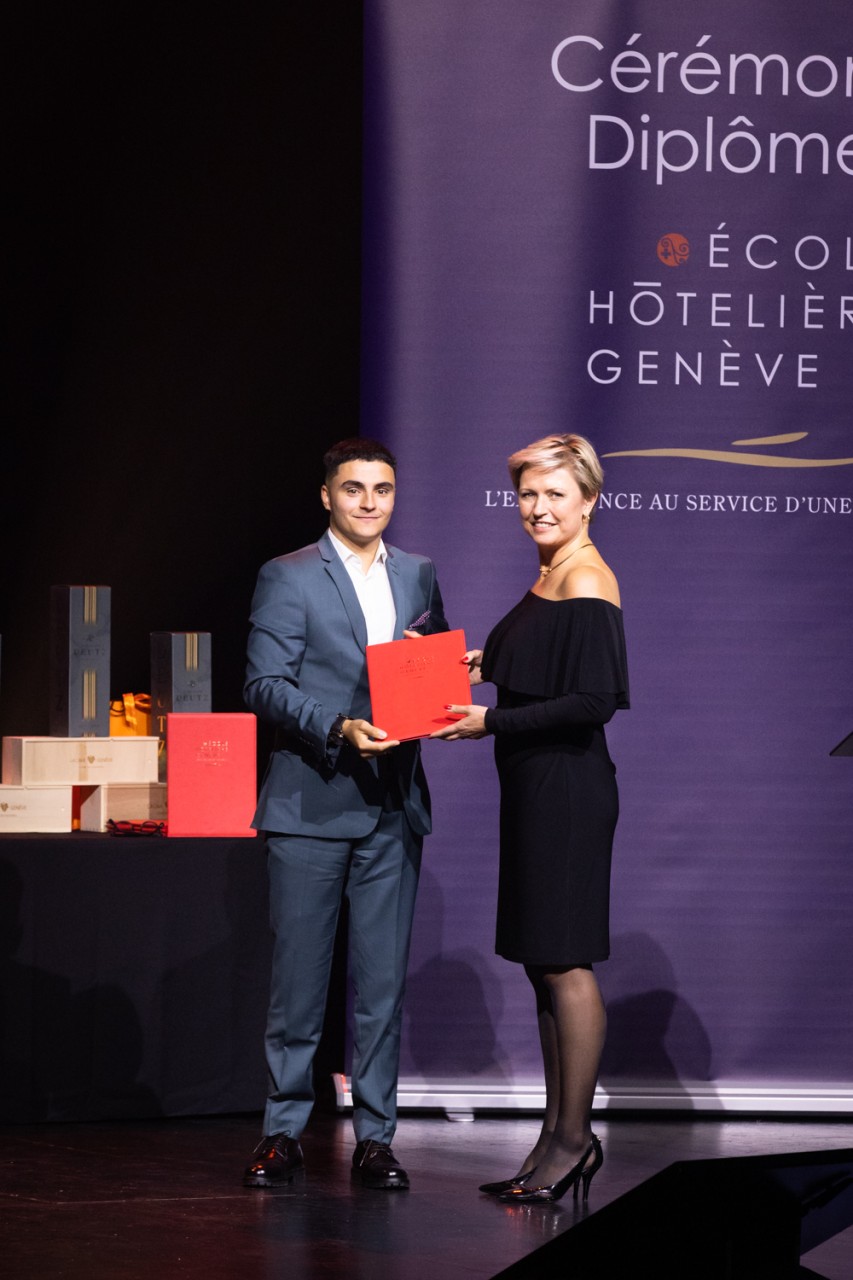
Moving from the hospitality world to that of wealth management is not a typical path: how did you make this transition?
“This transition was built step by step and, to be honest, it wasn’t easy. After school and the army, I first looked for opportunities in the hotel business because it was the logical next step in my career path. Then, when I decided to join the HEG gateway, I realized that I was going to have to convince a sector that doesn’t naturally recruit hospitality profiles.
I was determined to continue working during my studies. After several years of internships and professional experience, returning to a purely theoretical curriculum was not an option for me. I wanted to continue to develop in the field, gain experience and remain professionally active.
I sent out numerous CVs to banks and financial institutions. Most of the time, I didn’t get any feedback. A few interviews were successful in areas related to auditing or accounting, but nothing really concrete at first.
What really made the difference was my proactive approach. I started contacting industry professionals simply to exchange ideas and ask for advice. I wasn’t immediately looking for a job: I wanted to understand the business, meet people and create opportunities.
In the end, it was thanks to a human connection that a door opened at Serenis Family Capital. Someone agreed to pass on my CV to the company’s CEO, and then everything fell into place. I had several interviews before joining the team.
This experience has taught me that perseverance often plays a decisive role in creating opportunities. Nothing is ever totally linear, especially when you choose an unconventional path.”
Today, you're a Wealth Management Analyst at Serenis Family Capital. How would you describe your job to someone unfamiliar with the industry?
“Wealth management involves helping clients to manage, structure and develop their assets. It’s a profession that combines financial expertise, strategic advice and human relations.
In this sector, there are generally two main components. On the one hand, there’s asset management, which is the highly technical part of the business, involving investment selection, market analysis and financial strategies. On the other, wealth management, which focuses more on customer relations and personalized support.
At SERENIS – Family Capital, my role as Wealth Management Analyst is to contribute to the follow-up of client relationships and operations linked to wealth management. I’m involved in all the tasks that revolve around the client relationship: preparing files, monitoring the relationship, coordinating with banks, processing financial operations and preparing certain analyses.
In concrete terms, when a customer wishes to modify an asset structure, make an investment or carry out administrative changes linked to their personal situation, we ensure that all these steps are simplified and coordinated.
What makes this job particularly interesting is that it’s not limited to pure finance. There’s a real human dimension. Some customers are above all looking for comprehensive support, a relationship based on trust, and a contact person capable of accompanying them with peace of mind on a day-to-day basis.”
What does a typical day in your life look like?
“There really is no such thing as a typical day, which is precisely one of the most stimulating aspects of the job. My days generally begin with a phase of analysis and control of the movements recorded on the customer portfolios.
We work with a centralized system that brings together data from different partner banks. Every morning, I check the transactions carried out the previous day: share purchases, cash movements, fee payments and miscellaneous operations. This phase is essential to ensure data consistency and precise monitoring of portfolio performance.
A large part of my work also involves resolving administrative or technical issues. For example, when a customer changes tax residence or moves to another country, this involves numerous documentary and regulatory adjustments.
I also take part in the execution of financial operations. When a manager validates a strategy with a client, I may have to transmit orders to the banks, or carry out certain operations directly on the banking platforms.
At the same time, I prepare financial reports, help the managers prepare their client meetings, and help write the monthly Serenis newsletter. The latter includes market analyses, economic commentaries and strategic reflections on financial news.
In a human-scale structure like Serenis, everyone is involved in several aspects of the business. This versatility makes the days very varied and extremely formative.”
“Customers aren’t just looking for financial performance: they also want to feel understood, supported and trusted.”
How does your hospitality background influence the way you handle customer relations in finance?
“My background in the hotel business has had a huge influence on the way I work today. The EHG taught me human skills that are fundamental in asset management.
In the luxury hotel business, you learn to listen, observe and anticipate customer expectations. You also develop a certain relational intelligence: knowing how to adapt to different profiles, handle complex situations calmly and offer a personalized experience.
I find exactly these dimensions in finance. Customers aren’t just looking for financial performance: they also want to feel understood, supported and trusted.
The hotel business also taught me the subtleties of service. Being present without being intrusive, knowing how to reassure, managing the unexpected with fluidity: these are skills that are directly transferable to wealth management.”
What stimulates you most in your job today?
“What stimulates me most is the fact that I’m working in a constantly changing environment. Financial markets change every day, and you have to keep abreast of the latest economic, geopolitical and financial news.
I particularly appreciate the combination of customer relations and the technical nature of the business. Every situation is different, every customer has specific needs, and every decision requires thought and analysis.
I also find it very rewarding to be constantly learning. Finance is a sector where you never stop progressing, discovering new products, new strategies or new issues.
Finally, I really like the fact that I work in a human-sized structure. It allows me to be involved in numerous projects and to develop a global vision of the business.”
Conversely, what are the main challenges you face in your role?
“The first challenge is organization. Today, I’m still pursuing my studies in parallel with my professional activity, which requires a great deal of discipline and rigorous time management.
On a technical level, finance is an extremely vast and complex universe. You have to accept that you are constantly learning. Markets are constantly evolving, and part of the business is linked to unpredictable factors, such as geopolitical or economic conditions.
It’s also an industry where you have to remain humble. Even experienced professionals can never anticipate everything. That’s why you need to continually update your knowledge and keep a critical eye.
Fortunately, working in an environment like Serenis makes this progression much easier. The teams are accessible and there’s a real sharing of knowledge on a daily basis.”
Looking back, what was the most decisive moment in your career?
“Two moments were particularly decisive.
The first was my internship at the Hôtel du Cap-Eden-Roc. This experience left a deep impression on me, thanks to the level of service excellence and the quality of the professionals I worked with. It was there that I really understood the importance of customer relations and personalized experience.
The second key moment was my decision to join the gateway and then Serenis Family Capital. This represented a real change of trajectory. Going from baking to wealth management may seem unexpected, but this transition proved to me that with hard work, curiosity and determination, it’s possible to build an atypical career path.”
What's the most valuable lesson you've learned since graduating from EHG?
“The main lesson I’ve learned is that hard work always pays off when it’s accompanied by desire and intelligence in the way we move forward.
I’m convinced that opportunities are often created through action. It’s by trying, by working, by meeting people and by daring to step out of your comfort zone that you discover new perspectives.
Every experience is a learning experience, even when it doesn’t immediately lead to the desired result. In the end, the whole process builds skills, a network and an invaluable ability to adapt.”
When I’m interested in something, I try to invest myself fully and provoke opportunities rather than wait for them to come naturally.
If you had to sum up in one key skill or mindset what made the difference in your career, what would it be?
“I’d definitely say determination. I’ve always had some kind of guideline, even if I didn’t know exactly where it was going to take me.
When I’m interested in something, I try to invest myself fully and provoke opportunities rather than wait for them to come naturally.
I also think you have to accept that you can’t master everything right away. You move forward step by step, learning by doing, and gradually adjusting your course.”
And finally, what would you say to an EHG student who wants to explore less conventional career paths?
“Above all, I’d tell her to trust herself and dare to explore what really attracts her. It’s important to listen to one’s deepest desires and not limit oneself to a path considered ‘classic’.
EHG provides an extremely solid foundation and skills that are transferable to a wide range of sectors. The hospitality industry develops human, organizational and interpersonal skills that are invaluable far beyond the hotel sector.
I also think you have to accept that a career path is not always perfectly linear. Certain opportunities arise from personal encounters, experiences and initiatives.
Finally, I’d say don’t be afraid to try. Even if a path seems atypical at the outset, it can ultimately become a real strength and enable you to build a differentiating profile.”
Through his testimonial, Mateo Escriva highlights the wealth of possible career paths after the École Hôtelière de Genève, and how the skills acquired in hospitality can become real levers in other sectors of excellence.
Her story is a reminder that adaptability, determination and open-mindedness are often the keys to building a unique and meaningful career path.
Our warmest thanks to Mateo for sharing his experience, thoughts and lessons learned. The entire École Hôtelière de Genève team wishes him every success in his future career.
Discover our students' success stories