
Interview
Mourad Brovarone
In this interview, Mourad Brovarone looks back on his career journey, from the Geneva Hotel School to his current position as Chief Operating Officer at The Hamburger Foundation. He shares his vision of management, the lessons he’s learned from his experiences in the restaurant industry, and the importance he places on people, operational excellence, and the brand experience.
A graduate of the Geneva Hotel School, Mourad Brovarone currently serves as Chief Operating Officer of The Hamburger Foundation, where he oversees the management of three restaurants. Behind this career progression lies a path forged through a variety of experiences in the hotel, restaurant, and event industries, driven by a constant desire to understand the realities on the ground and the various inner workings of the business.
From his early operational experiences managing two Migros restaurants in Geneva—including the one in Balexert—to his arrival at The Hamburger Foundation, he has gradually developed a management philosophy based on approachability, accountability, and a focus on people. This career path now enables him to combine team management, operational excellence, and the development of a brand experience centered around a product that is as simple in appearance as it is demanding in execution: the burger.
Looking back on your career since graduating from the Geneva Hotel School, what moment do you now consider to be the real turning point in your career?
“I would say that the real turning point in my career was when I took on my current role as Chief Operating Officer. Today, I have to manage The Hamburger Foundation as if it were my own company, with all that entails in terms of responsibilities, decision-making, and overall vision.”
That was also when I fully realized just how much the Geneva Hotel School had given me. The education I received at the EHG prepared me, from a theoretical standpoint, for many aspects that I encounter today in my daily work: administration, human resources, operational management, and even business leadership.
At the same time, all of my previous hands-on experience—first as an employee and then as a manager—has been essential. It has allowed me to understand the realities of each role, but above all, how a team functions on a human level. Today, this combination of what I learned at EHG and my hands-on experience allows me to coordinate resources and people with a much more comprehensive view of the company.”
“To be a good manager, you first need to know the field and understand people.”
How have your experiences in the hospitality, restaurant, and event industries shaped your management style?
“My father, himself an EHG alumnus, as well as the various mentors who have guided me, have always instilled in me a belief: to understand people, you have to know the field.”
I think it’s difficult to effectively manage and motivate a team without having a practical understanding of the jobs of the people you supervise. You need to be familiar with the different positions and their challenges, as well as each person’s roles and responsibilities.
“The fact that I have held various positions myself helps me today to better understand my employees, their challenges, and their needs. This is what has gradually led me to develop a management style that I strive above all to be people-oriented, approachable, and close to the teams.”
What is your day-to-day work like as Chief Operating Officer at The Hamburger Foundation, and what are your main responsibilities?
“That’s exactly what makes my job interesting: no two days are ever really the same. Of course, I have a set of guidelines and goals to follow, but I have to constantly adapt to the operational realities of our three restaurants.”
My role now encompasses a very broad range of responsibilities. In particular, I handle human resources, including payroll, hiring, team management, and tracking sick leave and accidents. On the operational side, I oversee purchasing and suppliers, services, revenue and menu development, and delivery platforms.
I am also responsible for quality control, training our employees and interns, and managing our facilities—including cleaning, construction, and routine maintenance. Finally, a significant part of my daily work involves administrative tasks: correspondence, emails, dealing with government agencies, and managing work permits.
“It is, therefore, an extremely cross-functional role that requires the ability to shift quickly from a highly operational issue to a human, administrative, or strategic challenge.”
At a restaurant like The Hamburger Foundation, how do you turn a simple concept—a burger—into a true brand experience?
“What sets us apart is that our concept is very similar to a single-item menu. Unlike a restaurant with a very extensive menu, we know that our customers won’t necessarily come to eat a burger every day. So when they choose The Hamburger Foundation, we want to turn that craving for a burger into a truly memorable experience.”
It all starts with the product. We want to offer a high-quality burger, made with Swiss ingredients that are fresh daily, prepared with great care and passion. But of course, the experience doesn’t end with what’s on the plate.
It begins the moment the customer arrives, with a warm and simple welcome in an environment that we’ve updated to make it more colorful and bright. Next, our staff plays a key role: they must understand the customer’s preferences and be able to offer advice, whether the customer is looking for a classic burger or wants to try our Signature menu.
In the kitchen, this same attention to detail must be reflected in every burger. The goal is for the product to be prepared with care and consistency, right up until the moment it is served. It is this entire journey—from the welcome and personalized recommendations to the ambiance, the quality of the product, and the teams’ expertise—that transforms something as seemingly simple as a burger into a true brand experience.”
You joined The Hamburger Foundation after managing two Migros restaurants in Geneva. What made you want to take on this new challenge?
“At EHG, we’re very attuned to the world of luxury, and it was only natural that I began shaping my career path in that direction while I was still a student. But once I graduated, I set two goals for myself: to become a manager before I turned 30 and to explore as many different styles of dining as possible.”
That’s why I joined Migros. At first, I wanted to take over the management of a small restaurant and a take-out shop to understand how an organization of this size operates. But after just three months, my manager offered me the opportunity to take over the Balexert restaurant—which had annual revenue of about 6 million francs and around 40 employees—while retaining responsibility for the Meyrin restaurant, with revenue of about 2 million francs and about 10 employees.
I accepted this challenge, and the experience taught me a great deal. Later, a very good friend of mine, Marco Messulam—also a former EHG student who had just invested in The Hamburger Foundation—asked me to join the venture. One thing led to another, and I took on the role of chief operating officer.
“The project was a particularly good fit for me because I’ve always loved street food. I find it very interesting to take a product that’s sometimes associated with ‘junk food’—like a burger—and transform it into a high-quality dish, made with good ingredients and true craftsmanship.”
Has there been a mistake or an experience that has profoundly changed the way you manage?
“My various professional experiences have, in particular, allowed me to encounter environments where productivity was sometimes prioritized over people. This has greatly influenced my approach to management, because that approach has always been at odds with my vision of business.
I am convinced that a successful and sustainable company is built on a balance between sound operational management and a genuine focus on the people who make it thrive.
So I always promised myself that, the day I took on a leadership role, I would make sure to put people back at the center of my decisions. Results are obviously essential, but I believe they are also built by teams who feel valued, supported, and involved in the company’s mission.”
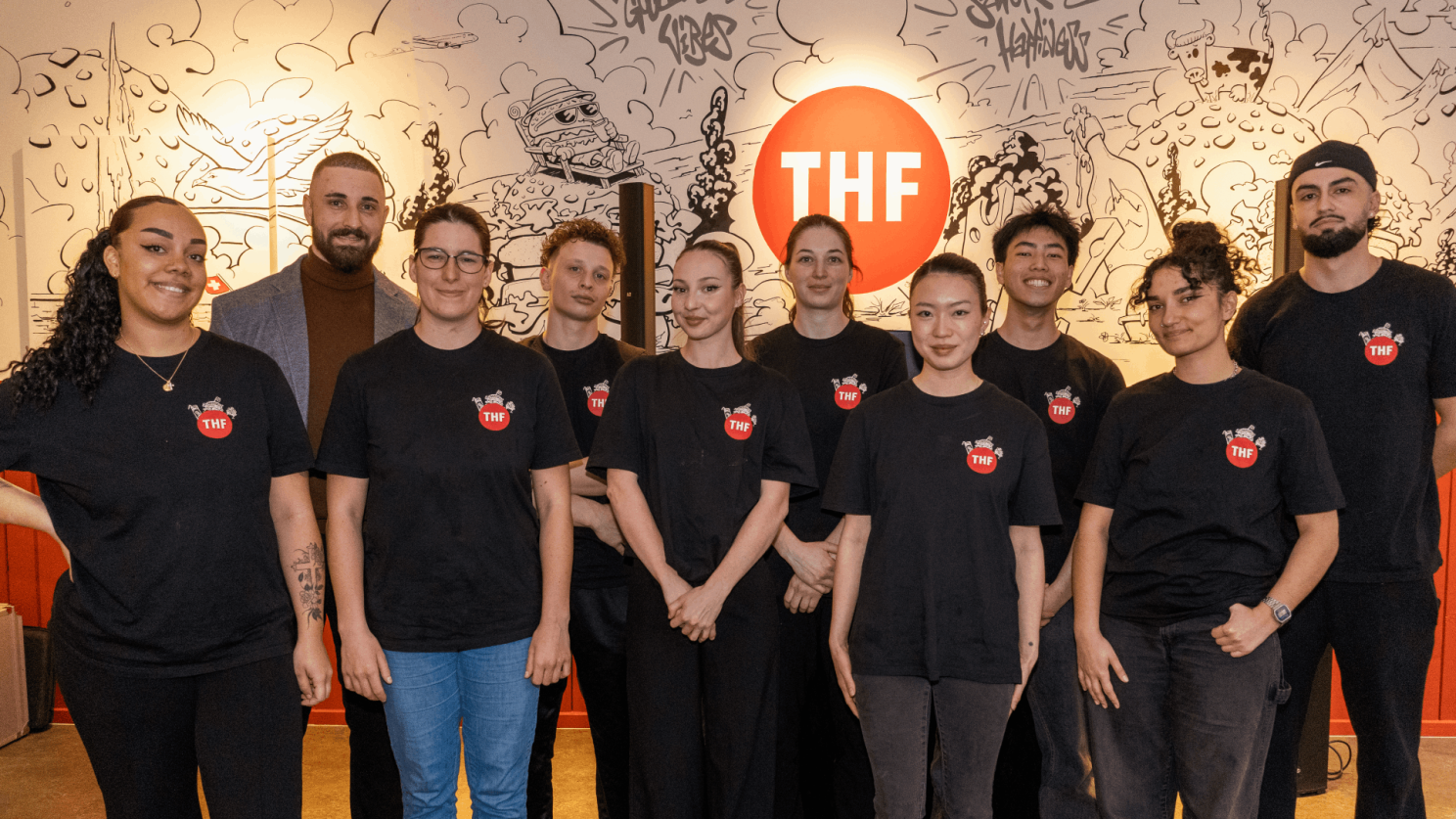
Today, what is most important to you when you're coaching your teams?
“There’s a phrase we hear a lot at EHG, and one that’s become increasingly meaningful to me as I’ve gained more experience: ‘The right man in the right place.'”
Today, I am convinced that a team’s success depends largely on our ability to place the right people in the right positions. When we bring together employees who are trained, competent, and—above all—motivated by what they do, we create the conditions necessary for collective success.
“My role, therefore, also involves understanding each person’s strengths, aspirations, and skills so that every employee can find their place and contribute their best to the team.”
How do you see the restaurant and hospitality industries evolving today?
“We are currently going through a particularly challenging period for the industry, especially in Geneva. Companies must constantly adapt, and digitalization is clearly one of the major challenges we face.”
It can be a tremendous asset to a business, simplifying certain processes or creating new opportunities, but it can also become very restrictive when it is poorly adapted to operational realities.
Despite these changes and the challenges facing the industry, I remain convinced that careers in the restaurant industry are wonderful when pursued with passion. It’s a demanding world that requires a tremendous amount of personal commitment. When you love this profession, that demand can be extremely stimulating. On the other hand, when you feel like you’re just enduring it, it can quickly become very hard to cope with.”
“You should never act rashly. You need to be able to come up with several strategies for achieving the same goal.”
Looking back, what habits or standards you learned at the Geneva Hotel School still guide you in your daily life?
“I would say, above all, the ability to think things through. One of the most important lessons I’ve learned at EHG is that you should never rush into things.”
Before making a decision, you need to be able to analyze a situation, anticipate its consequences, and consider several possible scenarios. For me, this is a fundamental quality in a leadership role.
A good leader must be able to develop multiple strategies to achieve the same goal and adapt when the first solution doesn’t work. “This ability to step back, think before acting, and keep several options open is probably one of the habits I acquired at EHG that serves me best today.”
What advice would you give to a student at the Geneva Hotel School who, like you, aspires to move into management positions?
“Looking back, I would mainly give him two pieces of advice.
The first would be to gain as much experience as possible and take on responsibilities as early as possible. Until the age of 30, I believe you should take advantage of every opportunity to explore different work environments, gain hands-on experience, learn to make decisions, and develop your critical thinking skills. All experiences are valuable—even the bad ones—because they help you understand what kind of professional and what kind of manager you want to become.
As you gain these experiences, you eventually come to understand much of how the profession works. You then have a solid enough foundation to put everything you’ve learned into practice and develop your own leadership style.
My second piece of advice would be very simple: hang in there and work hard. You have to be willing to take risks, step outside your comfort zone, and take on responsibilities when they arise. A career isn’t built solely on a degree or ambition—it’s built on experience, commitment, and hard work. And, over time, hard work pays off.”
Mourad Brovarone’s career path illustrates the importance of gaining a wide range of experiences, understanding the field, and putting people at the heart of management. Now the Chief Operating Officer of The Hamburger Foundation, he puts the lessons he learned at EHG into practice every day, while continuing to learn and take on new challenges. His journey serves as a reminder to future hospitality professionals that experience, reflection, and hard work remain essential ingredients for advancing to leadership roles.
Discover our students' success stories