Interview
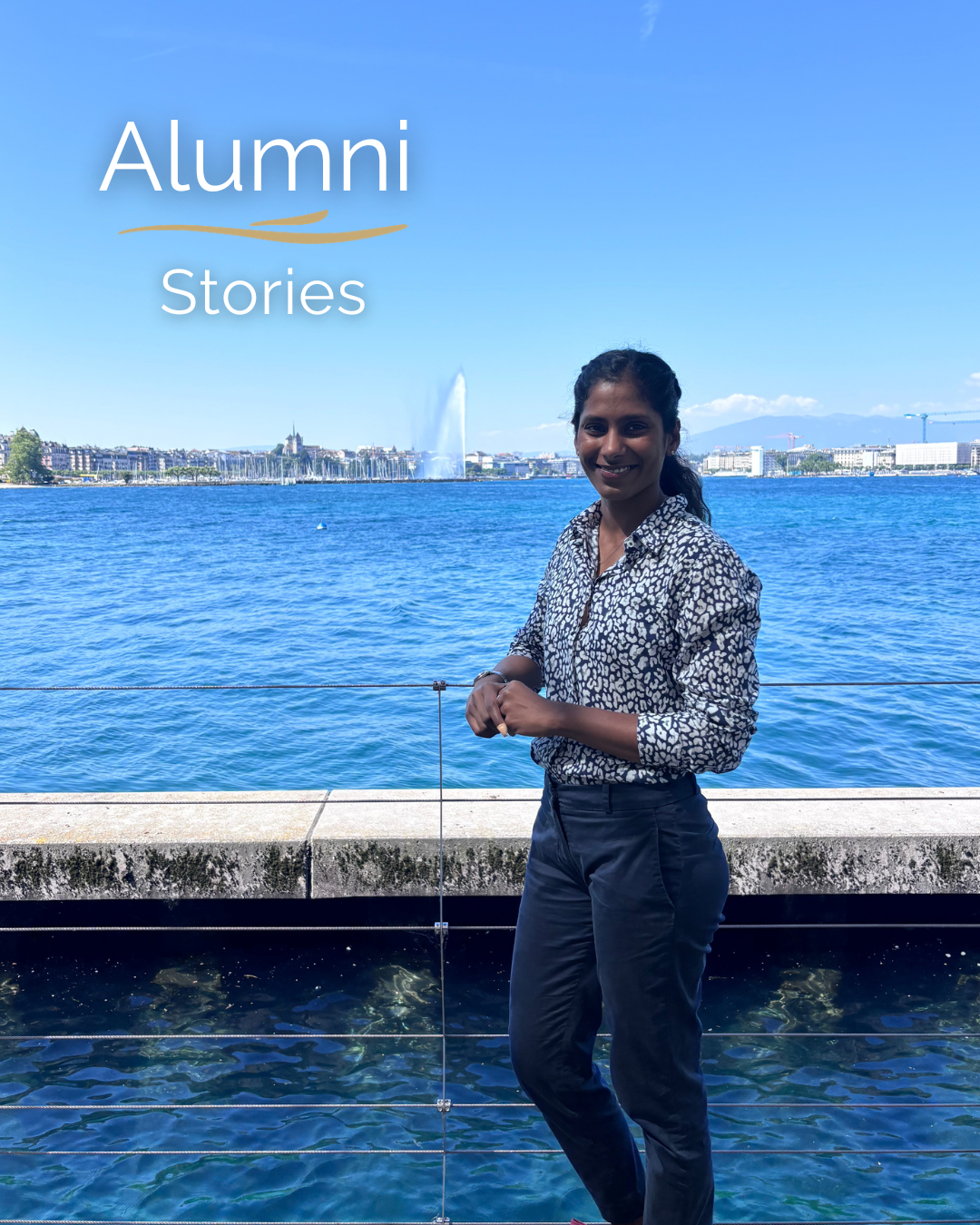
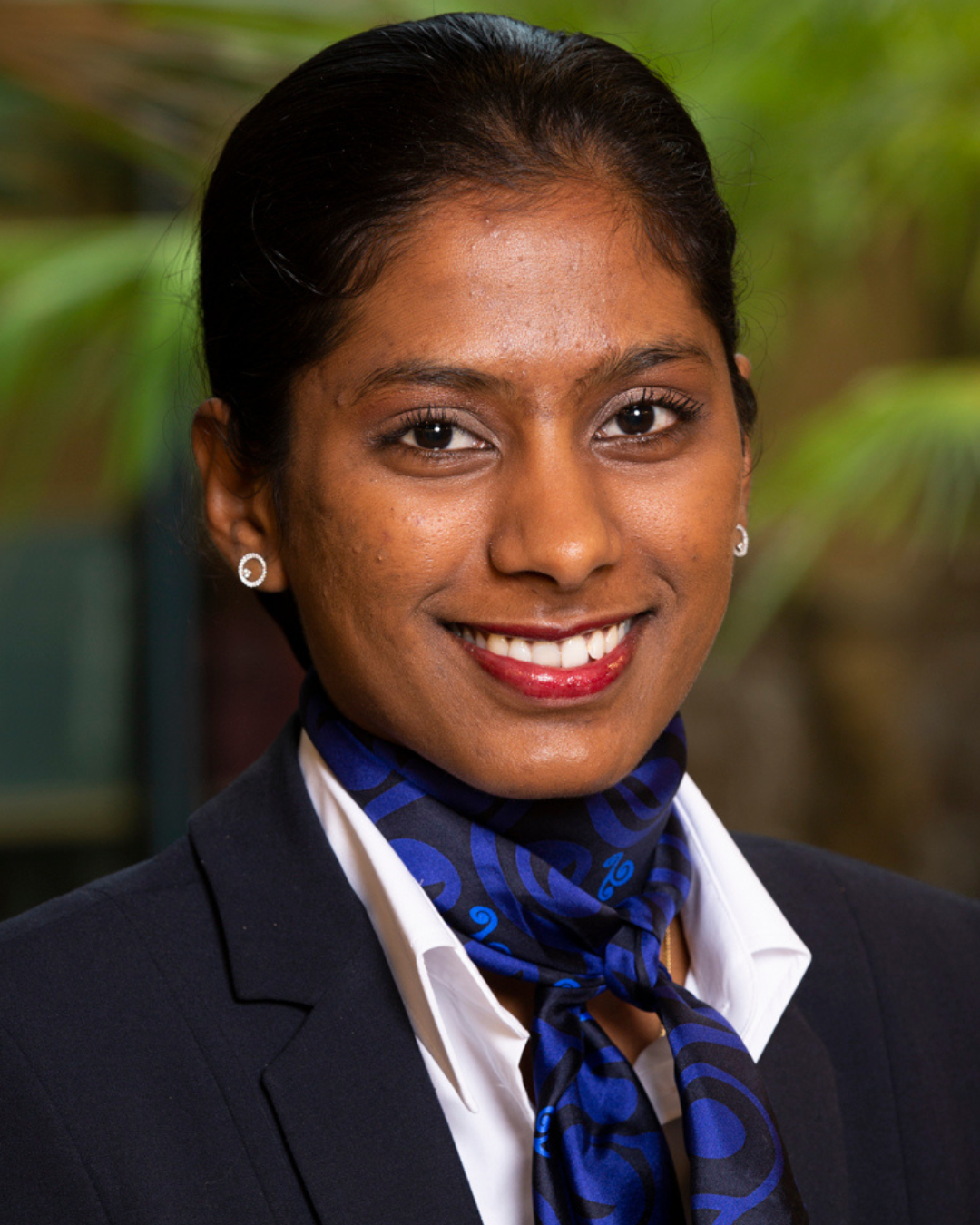
Vally Moodelly
In this interview, Vally looks back on the key stages of her career, the challenges she faced when opening and developing the restaurant, her vision of leadership, and the major changes currently shaping the hospitality and catering industries.
Just a few years after graduating from the École Hôtelière de Genève, Vally Moodelly now holds the position of Director at Restaurant de la Plage SA, one of the most iconic establishments on the Geneva waterfront.
Behind this rise to prominence lies a career built on rigour, curiosity and solid hands-on experience. From her early work placements in the kitchen and at reception to managing teams of several dozen staff members, she has gradually developed a management philosophy centred on people, authenticity and operational excellence.
After graduating from the Geneva Hotel School, did you ever imagine you’d be in a management role so soon?
“Although I have always aspired to run a restaurant, I never imagined I would be appointed to a management role so soon after graduating. I have always believed that career progression happens gradually, through experience and opportunities.
From my very first work placements, however, I discovered a real appetite for taking on responsibility. Whether in the kitchen or in other departments, I naturally sought to understand how a team works, to coordinate operations and to contribute actively to our collective success. These experiences made me realise that I enjoyed taking the initiative, guiding teams and being involved in decision-making.
When opportunities to take on responsibility arose, I embraced them as new challenges to tackle. Today, it is precisely this variety of tasks and this ability to have a tangible impact on how an establishment runs that I find so inspiring in my day-to-day work.”
‘Before you can supervise or manage a team, you need to understand the reality of the roles…’
Your career began on the front line, particularly in the kitchen and at reception. How did these early experiences shape your development?
“For me, it’s essential to start on the ground. Before you can supervise or manage a team, you need to understand the reality of the roles, the operational constraints and the challenges that staff face on a daily basis.
My time in the kitchen was particularly memorable. Back then, I often heard that the kitchen was a predominantly male-dominated world. I wanted to discover this reality for myself and understand what lay behind these preconceptions. This experience allowed me to appreciate the demands of the job, the rigour required and the importance of teamwork in an environment where every detail counts.
Even today, this hands-on experience enables me to have more constructive discussions with the kitchen teams. When I make a request or we set up a project, I am able to assess its feasibility and understand the operational constraints involved.
My experience in reception was just as formative. Working in a clinic, I discovered a completely different approach to customer service. It was no longer a matter of welcoming guests who had come to enjoy a pleasant experience, but of dealing with patients who were sometimes anxious or vulnerable. I learnt the importance of listening, empathy and the ability to reassure people.
‘These experiences now help me to better understand my teams, support their development and pass on interpersonal skills that are not always innate but are essential in the hospitality industry.’
You also took part in the work placements during your course. What memories do you have of them?
“The work placements have been among the most rewarding experiences of my time at the Geneva Hotel School. In just a few days, they give you the chance to discover roles that are sometimes little known and to gain a better understanding of everything that goes on behind the scenes in a hotel.
The housekeeping department made a particular impression on me. There, I discovered the immense amount of work carried out every day to ensure the quality of the guest experience. These are often roles that go unnoticed, but are absolutely essential to the smooth running of a hotel. These work placements offer a practical insight into all the departments and help you gain a better understanding of the realities on the ground. Although they are relatively short, they provide a valuable insight into the challenges and responsibilities specific to each role.”
You have worked in a wide variety of settings, from the catering industry to a clinic. How have these different environments enriched your approach to service?
“These experiences have taught me that, regardless of the sector, service is first and foremost about people.
At the clinic, I discovered a profoundly different approach. People weren’t coming for a moment of relaxation or pleasure, but to receive treatment. This meant we had to completely adapt the way we interacted with them, listening carefully, showing kindness and reassuring both patients and their loved ones.
This experience has profoundly shaped my view of service. It has enabled me to develop a more human and empathetic approach, which I now apply in the catering industry.
At Restaurant de la Plage SA, when it first opened, we also had the opportunity to build our own service identity. This required time, careful thought and numerous adjustments in order to create an experience that was consistent with the venue, its surroundings and our customers’ expectations.”
Your progression into administrative and operational roles, and then into management, has been rapid. What was the turning point that prompted you to aim for positions of responsibility?
“I’ve always been drawn to challenges and environments that offer the chance to build and improve things. When I joined the restaurant at Eaux-Vives beach as part of its launch, I quickly realised that everything still needed to be created: the procedures, the working methods, the organisation and even the customer experience.
This build-up phase was a real driving force for me. I felt as though I was part of an entrepreneurial adventure where every idea could have a tangible impact on the development of the establishment. It was like working on a blank page and having the opportunity to bring my own vision, experiences and lessons learnt to it.
Each new responsibility was therefore seen as an additional challenge to be tackled. The experience I gained during my work placements, as well as in areas such as human resources, enabled me to gradually make improvements and further structure certain processes. It was this desire to build, optimise and drive change that naturally led me towards management roles and then executive positions.”
From administrative and operational manager to director, what were the key stages in your career progression?
“One of the key developments has been learning to take a step back. When you’re heavily involved in day-to-day operations, you’re constantly on the go. Priorities come thick and fast, and the main aim is simply to get things done.
The role of director requires a different approach. You need to be able to anticipate, think long-term and analyse the issues as a whole. In a business like this one, where activity depends heavily on the weather, seasonality and numerous external factors, this ability to adapt is essential.
Project management has also been a key part of my career. I have always enjoyed developing new ideas, implementing concepts and devising new ways to take the establishment forward. The experience I have gained on the ground has enabled me to better understand operational realities and thus to approach projects with a vision that is both strategic and pragmatic.
Finally, event management now plays a significant role in my responsibilities. Organising events in such a unique venue requires mastery of many aspects, whether operational, logistical or regulatory. It is a particularly stimulating field that demands an excellent working knowledge of the venue.”
What was your biggest challenge when you took up this post?
“The main challenge undoubtedly lies in the need to adapt constantly. The catering industry is an extremely dynamic sector where conditions are constantly changing.
The weather has a direct impact on our business. One week can be particularly quiet, whilst the next sees an exceptional influx of customers. We therefore need to be able to anticipate, make the right decisions quickly and adjust our resources accordingly.
Team management is also a major challenge. We go from around twenty staff in winter to nearly fifty during the summer season. Recruiting, onboarding, training and coordinating these teams presents a real organisational challenge.
Beyond the operational aspects, it is also essential to remain attentive to changing expectations among customers and staff. The sector is evolving rapidly, and it is vital to adapt continuously in order to remain effective and attractive.”
How would you describe your management style today?
“My management style is, above all, people-centred. I firmly believe that a high-performing team is, first and foremost, one that works in a healthy, respectful and motivating environment.
Team spirit is central to the way I work. When staff enjoy working together, this is naturally reflected in the quality of service provided to customers. In my view, this positive dynamic is a key factor in success.
I also attach great importance to the well-being of my teams. The hospitality industry is demanding, and it is important to provide working conditions that allow staff to thrive in the long term. This involves, in particular, consistent rota planning, active listening and transparent communication.
My career path has also made me aware of the importance of respect and empathy in management. Having held various operational roles myself, I understand the realities on the ground and the challenges faced by teams. This experience now enables me to adopt a more collaborative approach that is more attentive to everyone’s needs.
Finally, I am taking an increasing interest in the principles of lean management in order to strike the right balance between operational efficiency, cost control and quality of service.”
In an industry as demanding as the hospitality sector, how do you manage to maintain a high standard of excellence on a day-to-day basis?
“Excellence is built, above all, through consistency. To achieve this, it is essential to establish clear rituals and standards that gradually become second nature to the teams.
I am also a firm believer in education. It is not enough simply to ask someone to carry out a task; you have to explain why it is important. When staff understand the purpose behind their actions, they become more committed and naturally buy into the objectives set.
I often remind my teams that we should welcome every customer as if we were welcoming our own family. This approach allows us to maintain high standards whilst retaining a human and sincere touch in our service.
For me, excellence isn’t limited to technical execution. It’s also reflected in attitude, attention to detail, the quality of interactions and a constant commitment to creating a memorable experience for customers.”
Is there a recent professional achievement that you’re particularly proud of?
“Of course, the results we’ve achieved in terms of customer satisfaction are a great source of pride. Seeing the establishment’s reputation grow and noting the positive trend in customer reviews is extremely rewarding.
However, the success I’m probably most proud of concerns staff retention. Every year, many seasonal staff members want to come back and work with us. For me, that’s one of the best indicators of success. It means they enjoyed their experience, felt valued and want to continue the journey.
I am also delighted to see several former students from the Geneva Hotel School joining our teams and progressing to positions of responsibility. Being able to contribute to their professional development and seeing them thrive is a real source of satisfaction.
Our customers’ loyalty is also a major achievement. When customers book their events with us for several years running or return regularly to the restaurant, it confirms that we have succeeded in creating an experience that leaves a lasting impression on them.”
“Les moments difficiles sont souvent les meilleurs moments d’apprentissage”
Conversely, could you tell us about a more challenging time that left a lasting impression on you, and what you learnt from it?
“In our sector, the unexpected is part of everyday life. Events often present the most challenging situations to manage, particularly when external factors disrupt the planned organisation.
I am thinking in particular of outdoor events, where the weather can jeopardise several months of preparation. These are particularly stressful situations that require a great deal of responsiveness and composure.
The departure of staff in key roles is also a significant challenge. Even when these departures are entirely understandable, they require rapid reorganisation and the ability to rebuild team dynamics.
Looking back, I see these difficulties as genuine learning opportunities. They enable us to develop our ability to adapt, improve our processes and strengthen our resilience in the face of the unexpected.”
You place particular importance on sustainable development. How does this vision translate into practice in your work?
“I am fortunate to work in an establishment whose concept is based precisely on a responsible and sustainable approach to catering.
In practical terms, this means placing a strong emphasis on local and regional produce. We pay particular attention to the origin of the products we offer and prioritise short supply chains wherever possible.
This approach sometimes leads us to make choices that require us to educate our customers. When certain products are not available locally, or when their consumption is no longer consistent with a sustainable approach, we opt for more responsible alternatives whilst explaining our reasoning.
We have also revamped our drinks menu to reduce packaging and support local producers. These choices may seem modest on the scale of a single establishment, but when applied daily in a restaurant that welcomes several thousand customers each year, their impact becomes significant.
Beyond the environmental aspects, I particularly appreciate the educational dimension of this approach. Raising customers’ awareness of new products, introducing them to local alternatives or showing them that plant-based cuisine can be creative and delicious also helps to change consumption habits.”
In your view, what are the major developments that are currently reshaping the hospitality and catering sectors?
“One of the major changes undoubtedly concerns employees’ expectations. The younger generations place greater importance on work-life balance, the quality of working conditions and the sense of purpose their work provides.
This shift is prompting companies to rethink their management practices and organisational structures. It is no longer simply a matter of recruiting, but also of retaining talent and creating an environment in which they are keen to make a long-term commitment.
At the same time, competition has become particularly fierce. Organisations must constantly set themselves apart, offer a consistent service and meet ever-higher expectations in terms of quality, customer experience and value for money.
Finally, new technologies and artificial intelligence are opening up some very exciting prospects. I am convinced that they will play an increasingly important role in optimising operations and enhancing the customer experience. The challenge will be to integrate them intelligently whilst preserving the human dimension, which remains at the heart of our professions.”
What message would you like to convey to students at the Geneva Hotel School who aspire to follow a similar career path to yours?
“The first piece of advice I would give is never to underestimate the importance of hands-on experience. Operational experience provides an essential foundation for understanding the various roles, developing leadership skills and gaining the credibility needed to manage a team.
Every experience counts. Whether in the kitchen, at reception, on the floor or in any other department, every role provides valuable insight into how an establishment operates as a whole.
I also encourage students to remain curious. The school provides an excellent foundation, but learning never stops. You must dare to explore new topics, take an interest in innovations, new technologies and developments in the sector.
Finally, I would tell them not to be afraid to step outside their comfort zone. The best opportunities often arise when you’re willing to take on a challenge that seems ambitious or unexpected. Our sector is demanding, but it’s also incredibly rewarding on a personal level. It’s a world where you can create memorable experiences, meet inspiring people and constantly reinvent yourself. That’s precisely what makes it so wonderful.”
From the front line to management, Vally Moodelly’s career path demonstrates that curiosity, commitment and a willingness to learn are the true drivers of success in the hospitality industry.
Drawing on her experience, she emphasises the importance of staying close to staff, daring to take on new challenges and putting people at the heart of every decision.
A big thank you to Vally Moodelly for her time and for sharing her inspiring journey. We wish her every success in her future endeavours.
Discover our students’ success stories